The Pitt Gets It Right
I watched the first season of The Pitt and await subsequent seasons on HULU. Having been a physician for many years I can attest that it’s on target, a great show, and a gritty hour-by-hour view of a busy urban emergency department. The medical care is accurate and current. However, it is more than a situational drama, the subtext is medical ethics. Every episode has elements of ethical dilemmas, which the cast must try to resolve in real time.
They don’t confront the ethnic variety we had at LA County, one hundred forty-five different ethnic or linguistic groups. Besides the inchoate ethical dilemmas, we had to contend with language barriers and cultural conflicts. (I had to learn Spanish on the job). In the face of dozens of languages and cultures (translators were a rarity) I learned humbly to ask the patient or family to enlighten me about the big questions. I suspect this extra dimension would overwhelm the writers of The Pitt, and I’m content that they elucidate the ethical subtext and the human cost of “battlefield” medicine.
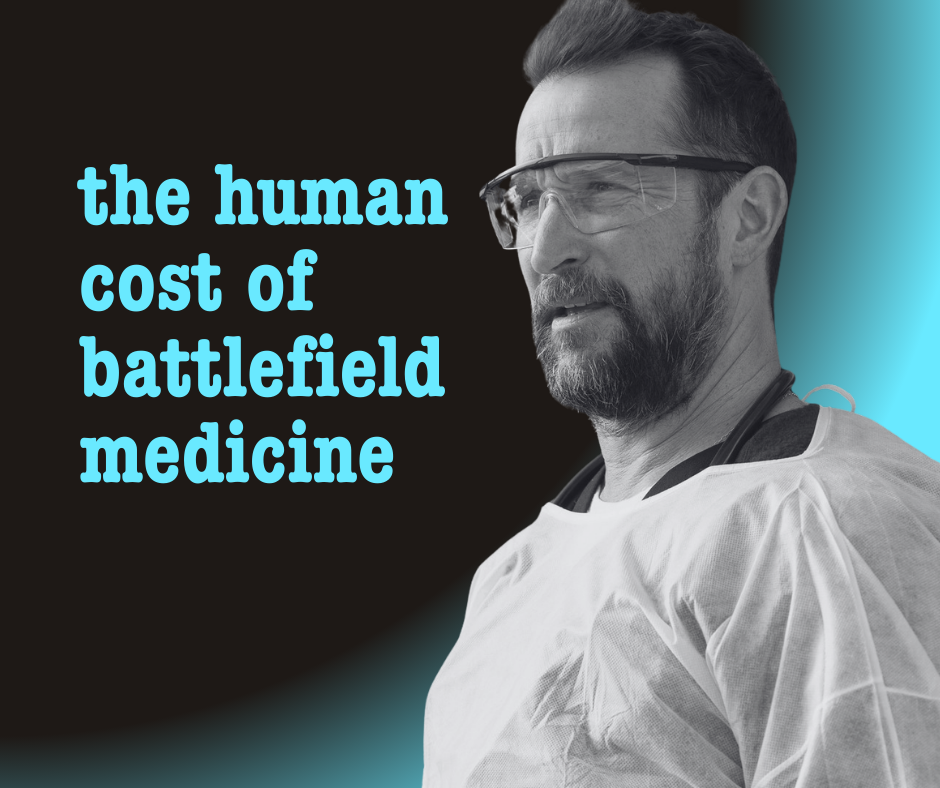
Noah Wyle as Dr. Michael "Robby" Robinavitch in The Pitt, image rights: HBO Max
If you read my second and third novels it’s clear that the circumstances are similar. LA County hospital in the early seventies had no ER. It was an evolving innovation that wasn’t implemented until the late seventies. We had a triage area, the Main Admitting Room that received patients from across the county and sorted them for admission to various services. The MAR provided only the most rudimentary emergency care. Critical cases were flung upstairs with a red blanket draped over their gurney. (We called them RB’s).
On internal medicine we had three admitting wards where patients spent no more than twenty-four hours being treated and awaiting admission to ICU, CCU or the general medicine wards. Most specialties received direct admissions, including general surgery, thoracic surgery, neurosurgery, medical neurology, pulmonary medicine—and more. If they had beds we sent psychiatric cases to the Psych Unit. The prima donna chief of neurosurgery rebelled against direct admissions, and the next year all acute neurological cases went to medical neurology—much to the detriment of severe head injuries.
With 2,500 active beds in the entire county complex, we received huge numbers of patients and housed the overflow in the hallways behind flimsy portable curtains. Triage downstairs was cursory. One evening I received a “heart attack” patient whose sternum displayed a broken knife blade. Another “overdose” had five .22 caliber bullets in his head. We learned not to trust the diagnosis that accompanied our patients. As a medical resident, on a busy night I would receive over twenty patients during a sixteen hour shift. My two stalwart interns and I would evaluate and treat as best we could. Sleep was a rarity.
If a patient died we performed a “second floor transfer” to the morgue. One evening I was summoned to the morgue because they thought a live one was in a drawer. The unfortunate young woman had died from a neuroleptic malignant syndrome (fever of 109) caused by a psych medicine prescribed for severe anxiety. She was still warm, but she was really most sincerely dead.
God help us if a surgical patient were sent to internal medicine. Especially on weekends the surgeons were overwhelmed with members of The Knife and Gun Club. On a Friday night I had to sit on a case that appeared to be appendicitis for the next thirty-six hours until I cajoled a surgeon into taking him to the OR. What they found was a piece of steak bone that had perforated the cecum causing a local abscess. The exhausted surgeon phoned me at home to express his congratulations and thank me for my conscientious care.
For an old time version of The Pitt try my novels, Thirteen Months a Year and Stone Mother, but kindly appreciate that enough of us were sixties activists that we were compelled to address the inadequacies at LA County. With the clandestine collaboration or our administrators, we eventually enacted a modicum of reforms and formed a union to negotiate our future circumstances including a million dollar fund for priority capital items that the interns and residents administered.
When we saw problems we found ways to address them. Nowadays we live in very different times.