American Nostalgia
If this past 4th of July weekend has you feeling nostalgic about the past, your own childhood, here are links to several of my books about some eras to remember:
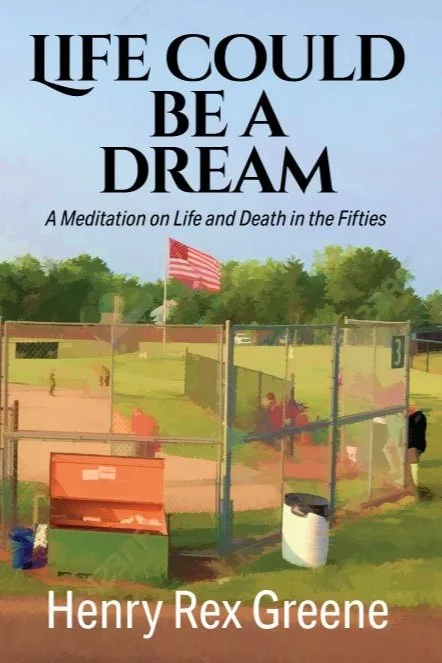
Life Could Be A Dream: My favorite story
Life Could Be A Dream is the story of Robby Barnaby, a nine-year-old baseball-loving boy whose idyllic 1954 suburban Los Angeles childhood is shattered by a series of devastating changes. After a promising start — playing ball, running small businesses with his brother, and enjoying a close-knit family life — Robby's world falls apart when his mother dies following surgery, leaving him and his three brothers in the care of an abusive father. A forced move to a chicken ranch in the unfamiliar town of Orcutt Park strips away everything familiar: his community, his beloved sport, and any sense of stability. As Robby grieves, dreams of his mother, and navigates a harsh new environment, the story raises an urgent question about what the future holds for four boys left to survive on their own.

Marlene
In the sequel to the novel Life Could Be A Dream, Robby Barnaby teams up with his old friend Marlene Vaughan to pursue justice for her mother Gertrude, who was abducted and murdered in 1953 in the San Gabriel Valley — a case that went cold and was never solved. When Marlene learns four years later that the suspected killers have returned to Los Angeles, she turns to Robby, assembling an unlikely team of amateur detectives that includes his stepmother Clara and his youngest uncle Melvin. Together they piece together a portrait of two itinerant World War II veterans — one volatile from a war injury, the other a passive follower — who frequented the Silver Dollar Saloon in El Monte on periodic visits to the area. Set against the backdrop of 1950s Southern California, the story blends coming-of-age drama with a gripping cold-case mystery as a group of ordinary people refuse to let a mother's murder go unanswered.

Camelot Lost
In 1961, inspired by President Kennedy's vision for the space race, high school senior Max King finds himself swept up in a era of youthful idealism and possibility. He enters junior college uncertain of his path, but a chance meeting in zoology class changes everything — he and Jan Rosing fall into a romance that quickly becomes a partnership in every sense, as she leaves her fiancé and the two become inseparable study companions. Their ambitions grow alongside their relationship, leading them to transfer to UCLA in 1963 and pursue pre-med together. Their world is shattered on November 22nd of that year when they hear of Kennedy's assassination, an event that — like the live broadcast of Oswald's murder days later — marks a profound turning point for their generation. Shaken but resilient, Max and Jan carry their Camelot-era idealism forward, earning acceptance to medical school in Los Angeles and stepping into adulthood on the far side of innocence. The novel is both an intimate love story and a portrait of a generation that dared to dream big, only to be forever changed by the turbulent decade that shaped them.

The Bookmen: A Requiem for the Sixties
In the sequel to Camelot Lost, newlyweds Max and Jan King stand on the threshold of medical school in the summer of 1965, even as the world around them grows increasingly turbulent. The Vietnam War is escalating toward full American involvement, and the Watts Riots signal the urban unrest that will define the years ahead. While Jan works in the school lab, Max returns to selling encyclopedias door-to-door, and the long hours that once bound them together as study partners now drive a wedge between them. His closest companion becomes Art Burton, a sharp Stanford pre-law graduate whose command of current events keeps Max attuned to the nation's deepening entanglement in Vietnam. But awareness isn't the only thing pulling at Max — the seductions of the free love era and the drug culture are never far away. Part marital drama, part cultural reckoning, The Bookmen captures a generation at the precise moment its idealism began to fracture, serving as a fitting requiem for a decade that promised so much and cost even more.